How Does an AI Trading Bot Work and Can It Make $2.8K Per Day
· based on the channel Johny B. (Crypto Savage)
Key takeaways
- Claude Opus 5.5 powers the AI trading bot in question
- The bot reportedly makes about $2,800 per day
- It uses AI-driven algorithmic and day trading strategies
- Automated crypto trading reduces manual decision-making
- Full guide and bot link available at https://tr.ee/kCQprH
An AI trading bot is an automated software program that uses artificial intelligence to analyze market data and execute trades without human intervention. The AI trading bot built with Claude Opus 5.5, as presented by Johny B. (Crypto Savage), reportedly makes around $2,800 per day by leveraging advanced AI algorithms and automated crypto trading strategies. For those interested in creating or using a similar bot, a full guide and resources are available at https://tr.ee/kCQprH.
What Is an AI Trading Bot and How Does It Work
An AI trading bot combines algorithmic trading with artificial intelligence to make decisions based on market conditions. Unlike traditional bots that follow preset rules, AI trading bots continuously learn from new data, adapting strategies in real time. The Claude Opus 5.5-powered bot uses natural language processing and machine learning models to analyze crypto market trends, volatility, and order book data to optimize entry and exit points.
The bot operates 24/7 to capitalize on crypto market opportunities, executing day trading strategies that focus on short-term price fluctuations. It integrates with exchanges through APIs, allowing it to place buy and sell orders automatically based on AI-generated signals.
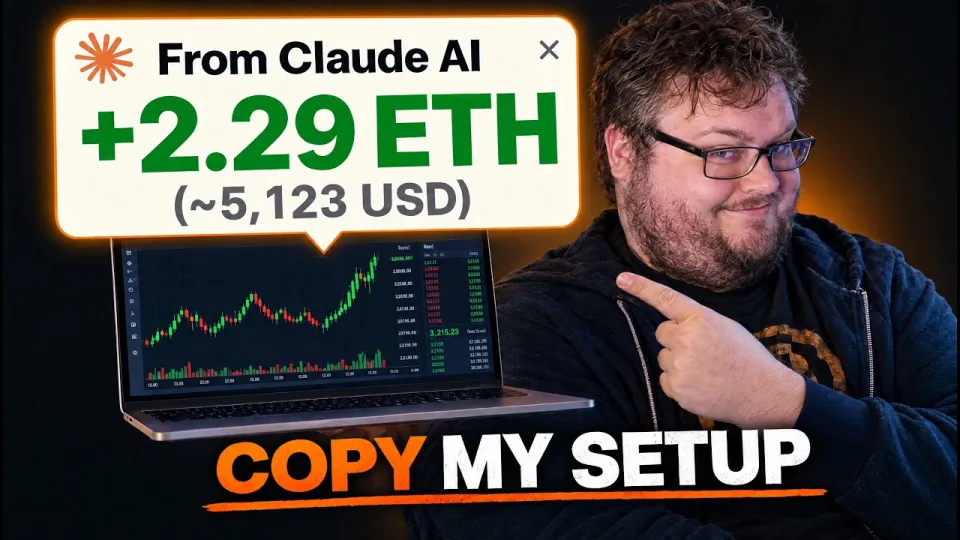
Video: I Built an AI Trading Bot With Claude Opus 5.5 That Makes $2.8K/Day (AI Crypto Bot Guide)
Building an AI Trading Bot With Claude Opus 5.5
Creating an AI trading bot like the one described involves several key steps:
- Choosing the AI Model: Claude Opus 5.5 provides enhanced language and data processing capabilities, useful for interpreting market news and sentiment.
- Defining Trading Strategy: The bot combines algorithmic rules with AI insights for day trading and swing trading.
- Integrating with Exchanges: Secure API connections enable live trading.
- Backtesting and Optimization: Historical data is used to test the bot’s performance and refine parameters.
- Deployment and Monitoring: The bot runs continuously with real-time risk management controls.
This approach allows users to automate complex trading strategies that would be difficult to implement manually.
Key Components of the Claude Opus 5.5 AI Trading Bot
- AI-Powered Signal Generation: The bot analyzes price patterns, volume, and sentiment data using AI to generate trade signals.
- Risk Management Algorithms: It applies stop-loss and take-profit rules to minimize losses and secure profits.
- Automated Execution: Trades are placed instantly when conditions meet strategy criteria.
- Performance Tracking: The system monitors daily profit and loss, adjusting strategies dynamically.
The synergy between Claude Opus 5.5’s AI capabilities and automated execution is what enables the bot to potentially generate significant daily returns like $2,800.
Benefits and Risks of Using AI Trading Bots
AI trading bots provide several advantages:
- Passive Income Potential: Automation allows traders to earn without constant manual involvement.
- Speed and Efficiency: Bots react faster than humans to market changes.
- Consistency: They stick to predefined strategies without emotional bias.
However, there are risks:
- Market Volatility: Sudden market moves can cause losses.
- Technical Failures: Errors or bugs in the bot’s code or exchange API access can lead to unintended trades.
- Overfitting: Bots optimized on historical data may underperform in future markets.
Users must approach AI trading bots with caution, thorough testing, and risk management.
Common Questions About AI Trading Bots
Many traders wonder how reliable and profitable AI bots truly are. Some common concerns include setup complexity, cost, necessary technical skills, and safety of funds. Using a proven framework like Claude Opus 5.5 with detailed guides helps mitigate setup difficulties and enhances security. However, no bot guarantees profits, and users should never invest more than they can afford to lose.
Useful Links
- Full AI Trading Bot Guide and Resources: https://tr.ee/kCQprH
Conclusion
An AI trading bot powered by Claude Opus 5.5 can automate crypto trading with advanced AI-driven strategies, enabling the potential to earn around $2,800 daily through day trading and algorithmic approaches. While the technology offers exciting possibilities for passive income and efficient market participation, it carries inherent risks that require careful management and ongoing monitoring. For those interested in building or deploying such bots, Johny B. (Crypto Savage) provides a comprehensive guide at https://tr.ee/kCQprH, making it easier to get started with AI crypto trading automation.
Source: I Built an AI Trading Bot With Claude Opus 5.5 That Makes $2.8K/Day (AI Crypto Bot Guide) · Markdown version
Questions & answers
What is Claude Opus 5.5 and why is it used in AI trading bots?
Claude Opus 5.5 is an advanced AI model that provides enhanced natural language processing and data analysis capabilities. It helps the trading bot interpret market news and sentiment, improving the quality of trading signals and decision-making.
Can an AI trading bot guarantee consistent daily profits like $2,800?
No AI trading bot can guarantee consistent profits due to the volatile and unpredictable nature of cryptocurrency markets. The $2,800 figure is based on reported performance but past results do not ensure future success.
Is it difficult to build an AI crypto trading bot?
Building an AI trading bot requires understanding of programming, trading strategies, and API integration with exchanges. However, detailed guides and frameworks, like the one provided by Johny B., can simplify the process for beginners.
What are the main risks associated with using AI trading bots?
The main risks include market volatility leading to losses, technical failures such as bugs or connectivity issues, and the possibility that the bot’s strategy may not adapt well to future market conditions. Proper risk management and continuous monitoring are essential.